
The evolution of flat roofing: from PVC to TPO
Flat roofs are not all the same. In particular, it is waterproofing that makes the difference-a key challenge in the building industry. Over the past decades, roofing membranes have evolved significantly to meet new regulatory requirements, improve technical performance, and adapt to the growing demand for sustainable and durable solutions.
For many years, PVC (polyvinyl chloride) has been the most widely used material for making roofing waterproofing membranes. Its chemical resistance, compatibility with hot-air welding, and ease of sourcing have encouraged its adoption. However, the industry is experiencing a significant change. TPO (Thermoplastic Polyolefins), a material belonging to the PO (Polyolefin) family of membranes, is, in fact, gradually replacing PVC in the latest generation of roofing systems.
This change is not simply a market trend, but a real technological evolution, based on concrete advantages in terms of performance, sustainability and operating costs.
The basics: what PVC and TPO membranes are
To understand why TPO is rapidly replacing PVC in roofing applications, it is necessary to start with the chemical and physical characteristics of these materials, analyzing how they behave both in production and during their service life.
PVC membranes are made from polyvinyl chloride combined with plasticizers, which are essential to impart elasticity and flexibility, especially at low temperatures. However, plasticizers are subject to migration over time-a phenomenon that leads to a progressive loss of elasticity, resulting in stiffening, cracking and reduced mechanical performance. This issue is exacerbated in the presence of UV light and temperature changes. In addition, PVC contains chlorine, an aspect that raises important environmental concerns related to both production and disposal. In fact, recycling of plasticized PVC membranes is complex and often not cost-effective.
PO membranes, and TPO membranes in particular, are made from polyolefins such as polypropylene (PP) or polyethylene (PE), combined with synthetic elastomers to increase flexibility. The molecular structure of TPO is inherently elastic and free of plasticizers, thus eliminating the problems of migration and degradation associated with PVC at the root.
TPO membranes are also reinforced with functional layers: non-woven fabrics or polyester nets to guarantee dimensional stability, protective layers against UV rays to prolong durability and, when necessary, adhesive or vapor barrier layers. The multi-layer structure, obtained through high-tech extrusion and calendering lines, allows TPO to offer superior performance compared to traditional materials.

Green roofs are among the most striking applications of TPO membranes
Why TPO beats PVC in flat roof membranes
The success of TPO in the flat roof waterproofing membrane sector comes from a combination of superior technical performance and environmental benefits.
In terms of durability, TPO membranes offer excellent resistance to atmospheric agents and UV rays without the need for additional stabilizers. The elastomeric component guarantees constant flexibility even in extreme conditions, with an operating range from -40°C to +100°C. This makes TPO ideal for all types of climates, both in cold areas where PVC tends to stiffen and crack, and in warmer regions where the risk of deformation and shrinkage is greater.
Another key feature is its resistance to chemical and biological agents. TPO is naturally resistant to the proliferation of fungi and mold and prevents root penetration, making it perfect for green roofs without the need for additional treatments. Furthermore, its mechanical strength is superior: TPO membranes offer excellent toughness and tear resistance (up to 15 MPa, depending on the formulation), which are essential qualities in mechanically fastened roofs, where stresses are high.
Ease of installation is another advantage. TPO membranes are hot-air welded over a wider temperature range than PVC, thus reducing installation time and the risk of errors. The result is safer joints that are quicker to install and less prone to defects.
Finally, environmental sustainability is one of the most important aspects in choosing TPO. Extruded membranes made from this material are 100% recyclable, free of chlorine and halogens, and comply with sustainable building standards such as LEED and BREEAM. In contrast, the life cycle of PVC raises issues related to the presence of chlorinated compounds and the difficulty of recycling. It is estimated that the demand for eco-friendly roofing materials is growing at a rate of more than 6% per year, driven by ESG (Environmental, Social and Governance) regulations and policies.
TPO VS PVC: a direct comparison
| Feature | PVC membrane | TPO membrane |
| Chemical composition | Chlorinated polymer with plasticizers | Polyolefins with elastomers |
| Environmental impact | Chlorine content, difficult to recycle | 100% recyclable, chlorine-free |
| UV resistance | Requires stabilizing additives, degradable | UV resistant, stable over time |
| Low-temperature flexibility | Depends on plasticizers, risk of stiffening | Intrinsic flexibility, no plasticizers |
| Thermal aging resistance | Medium | High |
| Resistance to roots and microorganisms | Requires specific additives | Natural resistance |
| Recyclability | Complex and limited | Complete, closed-loop cycle |
| Weldability | Hot-air welding possible, limited margin | Easier and safer hot-air welding |
| Life cycle cost | Lower initial cost, higher maintenance | Competitive initial cost, long-term savings |

Roof coverings are more resistant to high temperatures and UV rays with extruded TPO membranes
BG Plast’s technological solutions for TPO membrane extrusion
Changes in demand for materials necessarily lead to an evolution in production technologies. BG Plast offers complete lines for the extrusion and calendering of TPO waterproofing membranes, engineered to meet the needs of manufacturers who want to compete in the high-performance roofing market.
BG Plast solutions include single-screw extruders, ideal for processing pre-compounded TPO granules with a capacity of up to 500 kg/h. For those who need higher productivity or the ability to directly mix TPO with additives such as flame retardants or UV stabilizers, we offer co-rotating twin-screw extruders capable of processing virgin and recycled raw materials with throughputs exceeding 1600 kg/h.
The calendering phase is a crucial element in the production process. BG Plast calenders, available in three or four-cylinder configurations, enable the production of multilayer membranes with millimeter-precise thickness control, with cylinder geometries designed to adapt to different production requirements. The output width can vary from 1,500 to 3,960 mm, with a maximum processing speed of 45 m/min. Various types of systems are also available – 1 calender, 1 nip, or 1 calender/2 nip, with tandem extrusion or lamination configurations.
Coating and lamination: beyond simple waterproofing
The best roofing membranes do not just guarantee waterproofing, but must also meet specific additional functional requirements. The coating and lamination technologies developed by BG Plast allow the following to be produced directly in line:
- Non-woven fabric reinforcements to increase tear resistance
- Adhesive layers for application on special supports
- White reflective layers to create cool roof membranes with high solar reflectance.
These solutions optimize the production process, reduce operating costs, and create fully customized TPO membranes for every type of application in the roofing sector.
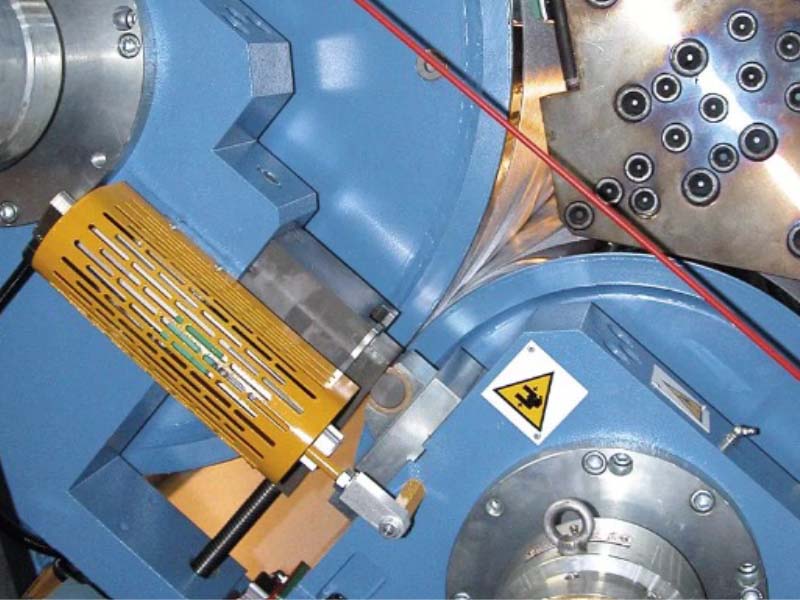
BG Plast’s extrusion and calendering lines for TPO sheets and membranes can be fully customized to achieve optimal results in line with manufacturers’ objectives.
TPO is the future of waterproofing membranes for flat roofs
The transition from PVC to TPO in flat roof membranes is a concrete response to market demands. TPO offers a balance between mechanical performance, durability, environmental sustainability, and life cycle cost optimization that PVC can no longer guarantee.
Those who wish to invest in a TPO waterproofing membrane plant that anticipates the future will find BG Plast to be an ideal partner, with over thirty years of experience in the extrusion and calendering of thermoplastics.
With our cutting-edge extrusion, calendering, and extrusion coating solutions, we accompany manufacturers on their journey to adopt TPO, with reliable, versatile, and high-performance technologies. Put us to the test: contact us for more information.