In the food, pet food, and coffee sectors, the quality of the finished product also depends on the packaging that contains it. It must preserve its quality over time, guarantee an effective seal and withstand expected storage conditions: snacks, kibble, cereals and roasted coffee contain fats, aromas or hygroscopic components that require specific barrier properties against moisture, fats, oxygen and light.
A single material is not always capable of meeting all these requirements. For this reason, the packaging industry frequently relies on multilayer structures designed by combining materials with complementary characteristics. This is the role assigned to extrusion coating: a molten polymer is extruded onto a moving substrate (paper, cardboard, plastic films, aluminum) to produce a multifunctional composite.
The performance of the final packaging depends as much on the choice of materials as on the line’s ability to process and laminate them efficiently.
How an extrusion coating line works
In the extrusion coating process, the molten polymer exits from a T-die and is deposited onto a moving flat substrate, such as paper, cardboard, polyester, metal foils, aluminum, cellophane, fabrics, nonwovens and other plastics. The coated substrate then passes between a rubberized pressure roll and a chromed chill roll: the pressure optimizes adhesion and surface quality, the cooling restores the melt to a solid state with the required surface finish and the material is wound.
In the extrusion coating & laminating variant (sandwich lamination), the extruded layer acts as an adhesive between two or more substrates, which are laminated while the coating is still hot and then pressed together. The in-line process uses no solvents or chemical adhesives, and depending on the product, may require one or more coating and lamination steps.
Which materials can be combined with extrusion coating?
The ability to laminate different materials makes it possible to impart properties to the packaging that could hardly be achieved using a single layer.
Among the materials for extrusion coating and lamination applications:
- Polymers – LDPE, LLDPE, HDPE, EVA, EVOH, CPP, TPU and ionomers such as Surlyn.
- Substrates – paper, cardboard, aluminum foil, nonwoven fabric, industrial textiles, and plastic films, including BOPET, BOPP and CPP.
The choice of combination depends on the required performance, the characteristics of the backing material, and the intended operating conditions of the packaging. The film thickness range spans from 8 to 250 µm, to be adapted according to the specific application and line configuration.
Therefore, there is no single extrusion coating solution valid for every product. It is necessary to define the most suitable structure by evaluating the properties of each material, the compatibility between layers, and the characteristics that the packaging must maintain throughout its entire life cycle.
Technical requirements of coating for food applications
Designing a line for food packaging must take into account two closely linked aspects: the performance required of the finished material and the plant’s ability to produce it with consistent characteristics over time.
Food contact compliance
Compliance covers the entire structure: polymers, additives, primers, and any adhesives. The regulatory benchmarks are the provisions on Food Contact Materials (FCM): Regulation (EC) 1935/2004, Regulation (EC) 2023/2006 on Good Manufacturing Practice, and, for plastic materials, Regulation (EU) 10/2011, which sets overall and specific migration limits.
Furthermore, from August 12, 2026, the PFAS limits of Regulation (EU) 2025/40 (PPWR) will apply: food contact packaging exceeding the established thresholds can no longer be placed on the EU market, with no sell-off period allowed for existing stock. For paper and cardboard designed to resist grease and moisture, extrusion-coated polyolefin is one of the viable solutions to achieve barrier properties without fluorinated treatments.
For pet food, however, the feed framework must be verified specifically in relation to the target market. Regulation (EC) No. 767/2009 governs the placing on the market and use of feed, including packaging and presentation requirements. Therefore, it is incorrect to automatically transfer every human food packaging requirement without evaluating regulatory applicability case by case.
Compliance verification must consider the final structure, operating conditions and intended food type. Depending on the application, migration testing, compliance documentation and sufficient information to demonstrate material suitability under declared conditions of use may be required.
The ultimate responsibility for final compliance rests with whoever places the packaging on the market, but the production line must enable it to be maintained: stable process, quick-disassembly rolls for changeovers, and easy cleaning.
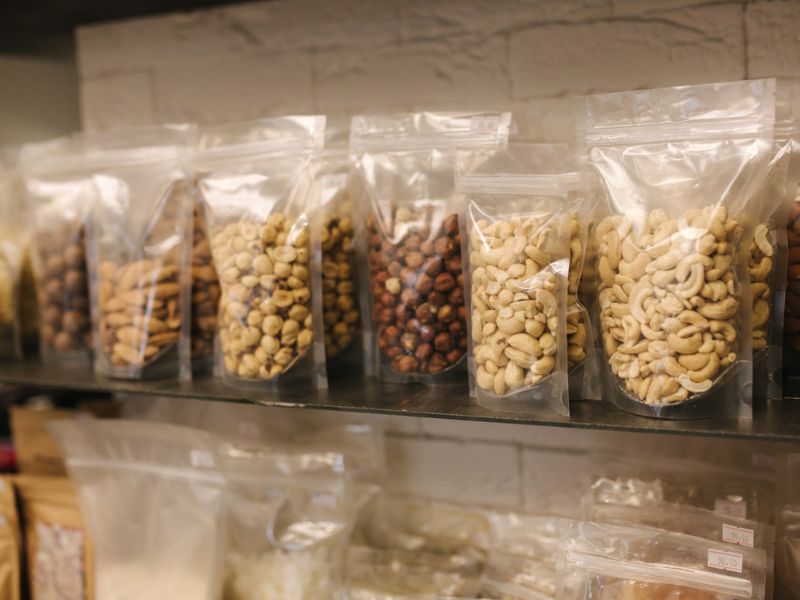
Full food compliance with extrusion coating for food packaging
Barrier properties: moisture, oxygen, fats, and aromas
The choice of materials is not solely about individual polymer performance. It is necessary to evaluate how different layers interact during extrusion, lamination, and final use.
Resin selection depends on the required function:
- LDPE, LLDPE, HDPE – moisture and generally grease barrier.
- Ionomers (Surlyn), EVA, CPP – adhesion and ease of sealing.
- EVOH – oxygen and aroma barrier. Being moisture-sensitive, it is placed between polyolefin layers in a co-extrusion configuration.
- Aluminum foil – near-total barrier to light, oxygen, and moisture.
Depending on the product, design may require one or more coating and lamination passes. The final architecture must be defined while also considering the ability to control thicknesses, adhesion, and production.
Odor-free performance, residual solvents, and thermal management
In pet food and coffee, olfactory characteristics are a key quality parameter. The in-line process eliminates residual solvents and adhesives. Melt temperature must still be monitored: polyolefins in extrusion coating often operate around 300 °C, and excessive temperatures or residence times can cause polymer oxidation and unwanted off-odors. Cooling should not be viewed merely as a final phase: it contributes to product formation and production cycle consistency.
This is why extruder stability and die thermal control are critical. The BG Plast lamination unit is designed to ensure a uniform temperature across the roll surface using helical cooling circuits. The configuration includes chromed chill rolls, rubberized pressure rolls with non-stick coating and pneumatic pressure control.
Adhesion between substrate and polymer
Adhesion is a fundamental requirement in extrusion coating. Laminated materials must maintain structural cohesion during subsequent processing phases and throughout the intended use of the packaging.
Substrate surface properties influence how the molten polymer spreads and adheres. Therefore, depending on the materials used, surface pre-treatment prior to extrusion may be necessary.
Different substrates require different treatments. Available options include corona, flame and plasma treatments, selected according to the material, along with an optional water-based or solvent-based primer unit.
Coating thickness and uniformity
Extruded film thickness ranges from 8 to 250 µm. Over large surface areas, excess material impacts costs, whereas insufficient thickness can compromise barrier integrity with pinpoint defects and delamination.
Control must cover both machine-direction uniformity and material distribution across the full working width. Several parameters must be coordinated: extruder output, line speed, polymer temperature, die lip adjustment and lamination conditions.
A T-die with manual or automatic adjustment allows precise control over extruded material distribution. Furthermore, integrating in-line thickness measurement systems supports the monitoring of individual layer thickness or the overall structural thickness.
Extrusion coating for food: from liquid packaging cartons to snack wrappers
In food packaging, extrusion coating is used in products that must meet widely varying functional demands.
Applications include milk, juice, and wine cartons, snack wrappers, soup and hot food packaging and coated paperboard for cups.
Material selection must account for required protection, compatibility with the contained liquid, and filling and storage conditions. In aseptic packaging, the overall structure must be designed in relation to the specific requirements of the packaging system: considering only the properties of the extruded layer is not sufficient.
Depending on the application, moisture resistance, package integrity, compatibility with fatty or aqueous foods and resistance to thermal conditions during filling or use can all play a critical role.
The extrusion line must be configured to achieve the target layer and maintain adequate adhesion, minimizing variations that could compromise laminate quality.
Pet food packaging: product protection and residual odor control
In pet food, packaging must be designed to preserve product characteristics during storage and transport. Depending on the food type, moisture protection, package strength, seal integrity and material compatibility with the content may be critical.
A particularly important aspect is odor management. Pet foods can be sensitive to foreign odors, including those potentially associated with process residues.
Extrusion lamination uses the molten polymer layer to bond substrates without resorting, in the lamination phase, to separate solvents or adhesives that could cause residual odors.
Line design must therefore consider not only the mechanical performance of the packaging, but also the factors that can affect product quality during shelf life.
Coffee packaging: moisture barrier and aroma retention
For coffee, packaging structure plays a fundamental role in preserving its organoleptic characteristics during storage. Moisture, oxygen exposure and the loss of aromatic compounds are key factors when defining required packaging performance.
The solution does not necessarily mean adding more layers: it requires identifying the material combination best suited to the product specifications and expected storage conditions. Actual performance depends on the multilayer formulation, layer thicknesses, lamination quality and seal integrity of the package.
The extrusion coating line must guarantee uniform material distribution, solid adhesion between components and process stability tailored to the packaging requirements.
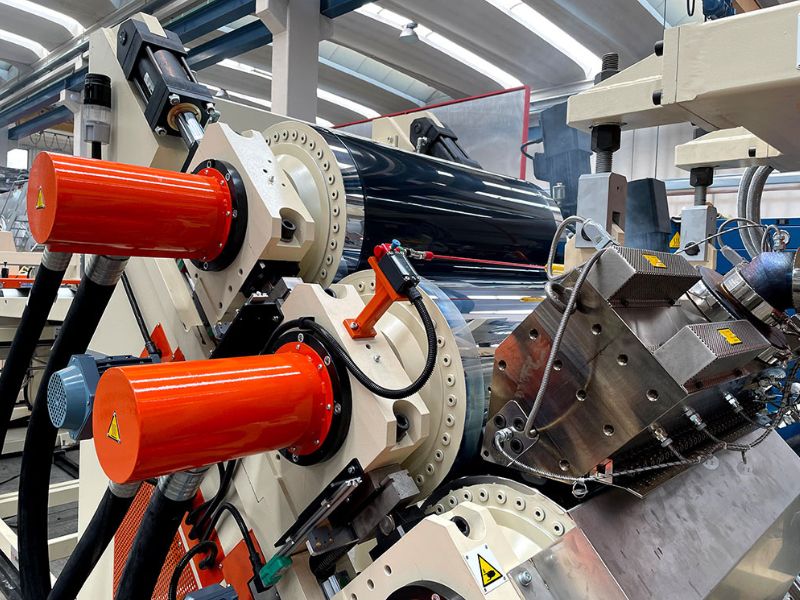
Thickness is among the main characteristics determining performance in coffee packaging
| Sector | Degradation Factors | Coating Function | Main Applications |
|---|---|---|---|
| Pet food | Fat migration and oxidation, odors, moisture | Grease and moisture barrier, absence of residual odors, sealability | Pet food packaging |
| Food | Moisture, oxygen, light | Barrier and sealability | Snack wrappers, soup and hot food packaging; aseptic cartons for milk, juice and wine; coated paperboard for cups |
| Coffee | Oxygen, moisture, loss of aromas | Oxygen and aroma barrier, package seal integrity | Coffee packaging |
Food, pet food, and coffee: sector-by-sector requirements
What an extrusion coating line for the food sector must guarantee
Selecting an extrusion coating line should not be based solely on nominal speed or production capacity. It is essential to evaluate the characteristics of the final product and accordingly define materials, plant configuration, and control systems.
Single-screw extruder: output and thickness control
The extruder must melt and homogenize the polymer to ensure an output in line with production speed and required thickness.
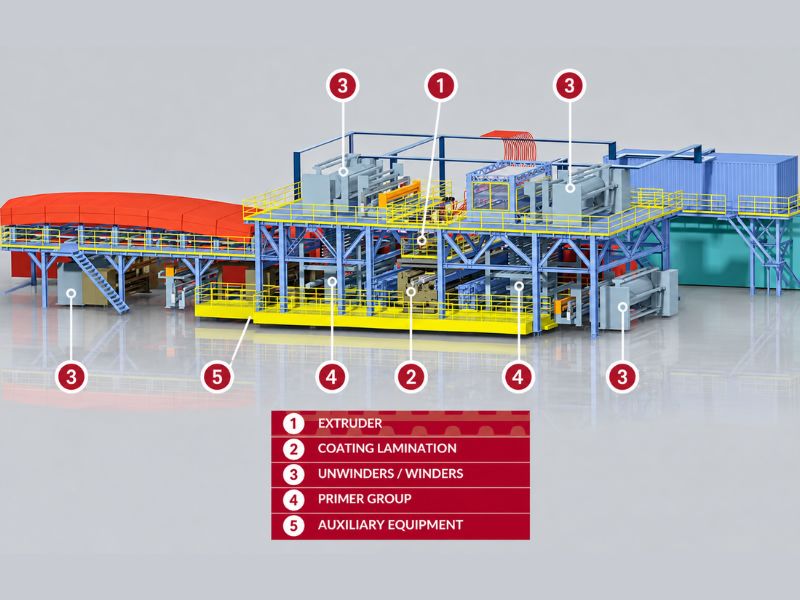
The core of the systems offered by BG Plast is the TM series single-screw extruder, featuring direct motor/gearbox coupling, air- or water-cooled AC motors and, upon request, torque motors without gearbox. The TM 65 to TM 160 range covers outputs from 260 to 1,100 kg/h for LDPE and from 210 to 900 kg/h for PP. Screw and barrel are made of nitrided 41 CrAlMo7 and 38 CrAlMo7 steels and, upon request, with hard coatings or bimetallic technology. The extruder carriage is adjustable along three axes to ensure optimal positioning of the melt.
The T-die can be supplied with manual or automatic lip bolt regulation, feed-block for co-extrusion and an internal deckling system to reduce extrusion width. It enables the creation of multilayer barrier structures and controls material distribution.
Lamination unit: uniform pressure and cooling
The unit is designed to maintain a uniform temperature across the roll surface, thanks to helical circuits that generate an incremental velocity in cooling water circulation.
BG Plast offers large-diameter chill rolls with matte chromed surface (special surfaces available upon request), cooled and mirror-finished chromed counter-pressure rolls, rubberized pressure rolls with PTFE anti-adhesive coating and pneumatic pressure control. Rolls feature quick disassembly for rapid replacement, and the unit can be adjusted in height and machine direction via servomotors.
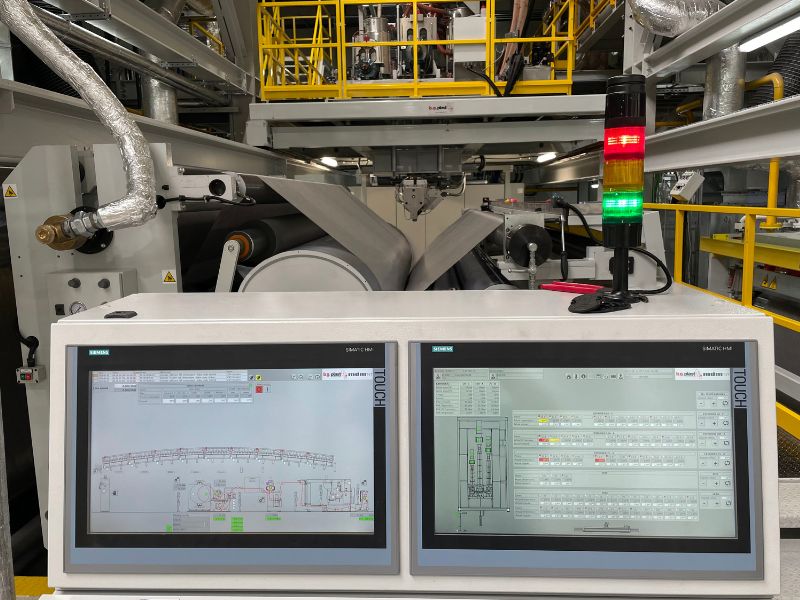
The lamination unit of BG Plast extrusion coating lines
Primer, surface treatments, and thickness control
Substrate surface treatment can be decisive in achieving adequate adhesion.
The primer unit is available with water- or solvent-based formulations, featuring “easy sleeve” changeovers and anilox or rotogravure roll systems. Corona, flame and plasma treatments are selected based on the substrate, while thickness gauges paired with the automatic T-die enable control over individual layer or total structural thickness.
Unwinders and winders: continuity and material management
BG Plast unwinders and winders can manage roll diameters ranging from 400 to 1,800 mm, equipped with semi-automatic or fully automatic splicing systems and line speeds up to 500 m/min in automatic mode.
Advantages of extrusion coating for flexible and aseptic packaging
- Targeted barrier performance against moisture, oxygen, fats and aromas, with structures tailored to specific products.
- In-line process without solvents or chemical adhesives, reducing the risk of residual odors.
- Coating and lamination in a single pass, even across multiple substrates.
- Recipe flexibility: the same line can process various resins and substrates, from paper and cardboard to films and aluminum.
- Efficient raw material usage, thanks to precise thickness control.
BG Plast extrusion coating lines: a configuration built around packaging needs
There is no single structure suitable for every product. The project begins with analyzing the product to be packaged, the substrate, required shelf life and regulatory requirements. Only then does the tailor-made design of an extrusion coating line begin: resins, co-extrusion, layer thicknesses and plant configuration are defined. This is our working methodology: customer requirements analysis, engineering, manufacturing, and in-house testing.
When evaluating a new line, it is helpful to start with a few key questions:
- Which materials need to be laminated and what properties must each layer offer?
- What thicknesses, widths and barrier characteristics are required for the final product?
- Which surface treatments are required to ensure proper adhesion?
- What adjustment and measurement systems are needed to maintain process control?
- What are the requirements for winding, productivity, and operational continuity?
Our goal is to assist you at every stage, because for packaging manufacturers, having a line configured around these specific needs means managing laminate characteristics with greater confidence and efficiency.
That is why we design and manufacture complete extrusion coating and lamination lines for thermoplastic materials, developing tailored solutions according to our customers’ application specifications.
If you are evaluating a new extrusion coating line or upgrading an existing plant, contact us.