
Intrinsic viscosity (IV) is one of the key parameters in PET foils production because it directly influences the mechanical properties, processability, and quality of the end result. Control of IV is essential to ensure an efficient extrusion process and a finished product that meets the standards required by different application sectors, from food packaging to technical components.
In this article we will analyze the role of intrinsic viscosity in PET foil production, the main challenges in its control, and the solutions offered by BG Plast to optimize the quality of the extruded material.
What is intrinsic viscosity and why is it important
Intrinsic viscosity is an indirect measure of the molecular weight of PET and indicates the degree of polymerization of the material. It is expressed in deciliters per gram (dL/g) and is determined through a solvent dissolution test.
Why IV is crucial for PET extrusion
- Mechanical strength: a high IV corresponds to longer polymer chains, giving the material greater mechanical strength and dimensional stability.
- Processability: careful control of inherent viscosity ensures consistent processing during extrusion, avoiding pressure variations and thickness homogeneity problems.
- Final product quality: an incorrect IV value can cause brittleness, poor impact resistance and surface defects in PET foils.
- Impact on sustainability: the use of recycled PET (rPET) reduces the IV of the material, making an effective control system necessary to maintain the required properties.
The relationship between intrinsic viscosity and the properties of PET
The value of intrinsic viscosity varies depending on the intended use of PET. For example:
- PET for textile fibers, IV between 0.40 and 0.70 dL/g
- PET for films and extruded foils, IV between 0.70 and 1.00 dL/g
- PET for bottles, IV between 0.70 and 0.85 dL/g
A value that is too low can compromise the rigidity and strength of the foil, while a value that is too high can make the material difficult to process.
Factors affecting IV during extrusion
- Drying of the material: PET is hygroscopic and absorbs moisture. If it is not properly dried before extrusion, the moisture will degrade the material by reducing viscosity.
- Temperature and dwell time in the extruder barrel: high temperatures and long dwell times can cause PET to depolymerize, lowering the IV.
- Use of rPET: recycling results in a loss of inherent viscosity due to degradation of polymer bonds. It is critical to incorporate additives or molecular reconstruction systems to maintain material quality.

PET foil extrusion with our lines allows the use of a mix of recycled and virgin PET
How to optimize intrinsic viscosity in PET extrusion lines
To ensure stability of intrinsic viscosity and obtain PET foils with optimal properties, accurate control of process parameters is essential.
BG Plast solutions for PET foil production
BG Plast offers advanced technologies for IV control in PET extrusion lines, including:
1. Extrusion lines for recycled PET
- Single-screw and twin-screw extruders specifically for recycled PET.
- Advanced degassing systems to eliminate residual moisture and prevent IV drop.
- Output up to 1800 kg/h with thicknesses ranging from 0.15 to 1.50 mm.
2. Real-time quality control
- Temperature and pressure sensors to monitor material behavior during extrusion in real time.
- Extrusion speed control to keep the inherent viscosity constant throughout production.
3. Advanced coextrusion systems
- Up to 7 layers to combine virgin PET and rPET without compromising mechanical properties.
- Barrier layers to improve chemical and moisture resistance.
4. Drying and crystallization technology
- PET pretreatment systems with crystallization and dehumidification.
- Effective moisture removal to maintain optimal IV during extrusion.
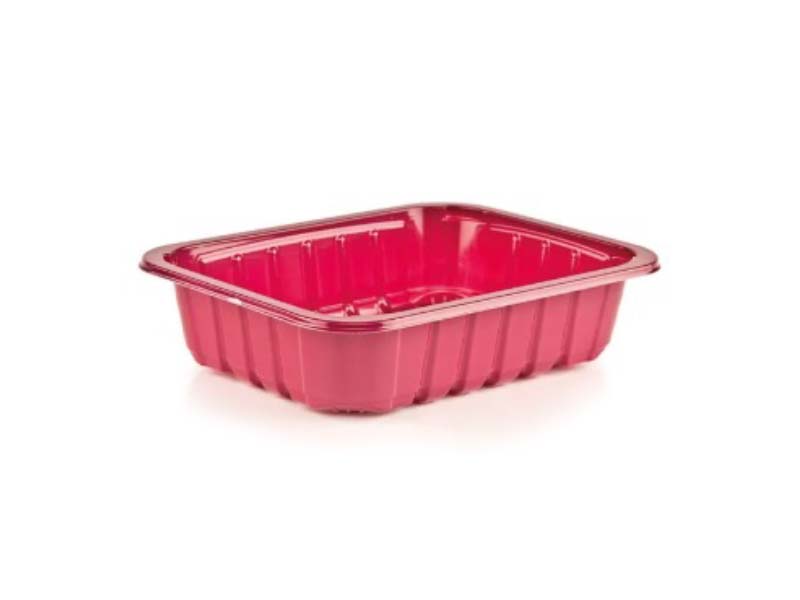
Applications of extruded PET include food packaging
Intrinsic viscosity and sustainability: a winning combination with BG Plast
Intrinsic viscosity is a crucial parameter in ensuring the quality of PET foils, directly influencing mechanical strength, processability and production efficiency. Accurate IV control allows obtaining high-performing foils, reducing waste and improving process sustainability.
In the packaging industry in particular, PET is one of the most widely adopted solutions due to its strength and recyclability. The increasing use of recycled PET requires advanced technologies to preserve mechanical properties and ensure compliance with food and industrial safety standards.
BG Plast responds to these needs with state-of-the-art extrusion solutions, optimizing IV control and supporting the industry’s transition to a more efficient and sustainable circular economy. Investing in advanced extrusion systems means not only improving the quality of the final product, but also reducing environmental impact and enhancing the value of recycled resources.
Start your next project now: optimize your PET foil production with us. Contact us.